
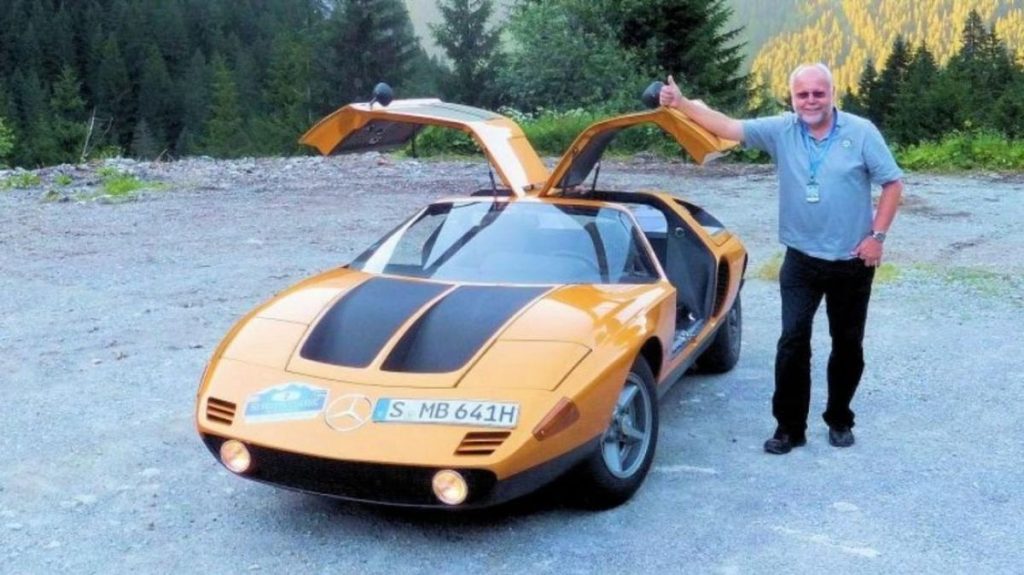
There are engineers whose names appear on patents, and then there are engineers whose work resonates every time an engine reaches its redline without strain. Bernd Ramler belongs firmly in the second group. He never chased celebrities or stood beside concept cars at international auto shows. Yet, if you have ever driven a German performance car and felt that seamless blend of power, precision, and unshakeable confidence, you have experienced the philosophy of a man who believed engines should earn respect through performance rather than promotion.
This is the story of the engineer who shaped the mechanical heart of German automotive excellence and left a permanent mark on the industry.
The Era When Engineers Were the Stars
To understand the impact of Bernd Ramler, one must first understand the landscape of the German automotive industry during his tenure. From the late 1970s through the early 2000s, powertrain departments were treated as sanctuaries of long-term thinking. This was an era before marketing departments dictated output figures and before software was used to mask mechanical weaknesses.
- Focus on Longevity: Engineers were given years to perfect airflow and combustion stability.
- Mechanical Integrity: Powertrains were tuned for endurance rather than just 0 to 60 headlines.
- Purity of Purpose: The engine was considered the soul of the vehicle, not just a line item in a budget.
This disciplined environment shaped Ramler into an engineer who prioritized honesty in mechanics above all else.
A Mind Trained in Discipline Not Drama
Ramler’s career followed a distinctly rigorous German path: academic grounding, obsessive testing, and a philosophical relationship with mechanical components. While other engineers spoke of peak horsepower, Ramler focused on the behavior of the machine. He was known for asking questions that forced his teams to look past the spec sheet:
- How does the engine respond at seven-tenths of its capability?
- What is the mechanical state after 200,000 kilometers?
- Does the power delivery feel honest when pushed repeatedly on the track?
For Ramler, a successful engine was one that remained composed under extreme abuse. This belief system would eventually define three of the most significant powerplants in automotive history.
-
The Porsche Carrera GT V10: Purity Before Performance Trends
Ramler’s work on the Porsche Carrera GT (Type 980) remains a pinnacle of naturally aspirated engineering. At a time when turbochargers were becoming the industry standard for easy power gains, Ramler resisted. He focused on a 5.7 liter V10 that originated from a cancelled Le Mans racing project.
The result was a masterpiece of linear power. The engine did not overwhelm the driver with sudden surges; instead, it invited them to explore the higher reaches of the RPM range. The throttle response was instantaneous, and the scream of the V10 became an instant legend. Journalists and drivers struggled to describe the feeling, but what they were experiencing was perfect mechanical balance—an engine designed to reward driver commitment.
-
The Mercedes-AMG M156: Intelligence Enters the Equation
As emissions regulations tightened and electronics began to dominate the engine bay, many purists feared the loss of mechanical character. During his time with AMG, Ramler proved that technology could refine performance rather than sterilize it.
The M156 was the first engine designed entirely in-house by AMG. Ramler’s influence ensured that advanced valve timing and digital management worked in harmony with a massive 6.2 liter displacement. This engine became a reference point for the modern performance era:
- Versatility: It was effortless and smooth in city traffic.
- Character: It felt alive and aggressive when the driver demanded speed.
- Durability: It maintained the “unbreakable” reputation required of a high-performance Mercedes-Benz.
-
The Bugatti Veyron W16: Mastery Without Compromise
By the time Ramler contributed to the W16 engine program for the Bugatti Veyron, he was no longer proving a point; he was refining a philosophy. The challenge was unprecedented: managing the thermal loads of four turbochargers and 1,001 horsepower while maintaining the refinement of a luxury car.
This engine combined everything Ramler believed in. It featured extreme thermal efficiency and mechanical sympathy. It was powerful without being twitchy, and refined without being soft. It served luxury and world-record performance with equal dignity. Even today, engineers cite the W16 when discussing how to balance massive output with longevity. It was not just an extreme engine; it was a complete one.
Why Bernd Ramler Remains a True German Genius
Ramler never chased records; he chased correctness. His engineering philosophy can be summarized by three core pillars that continue to influence the industry:
- Consistency: An engine should perform exactly the same on day one and year ten.
- Reliability as Luxury: He believed that true luxury is the peace of mind that comes from superior engineering.
- Repeatable Performance: True performance is measured by how many times a car can perform a task, not a single theatrical lap.
The Quiet Influence That Shapes Modern Motoring

Even as the automotive world shifts toward electrification and hybridization, the values championed by Bernd Ramler remain relevant. Modern obsession with thermal stability, smooth torque delivery, and the refusal to trade durability for marketing numbers are all echoes of his work.
In a world increasingly dominated by synthetic soundtracks and software-driven experiences, the legacy of Bernd Ramler reminds us that great cars are shaped by people who choose substance over spectacle. He was not famous, and he did not need to be. Every time a high-performance German engine delivers power with that signature, seamless confidence, his work is doing the talking.
The evolution of the internal combustion engine is a story of relentless refinement, and few individuals have contributed more to its perfection than Bernd Ramler. At Motozite, we are dedicated to celebrating the engineering excellence and historical milestones that define the automotive world. Follow Motozite for more expert analysis, deep dives into automotive history, and updates on the trends shaping the future of performance driving.