
Introduction
The recently concluded India-EU Free Trade Agreement (FTA), finalized in January 2026, represents one of the most significant shifts in India’s economic policy in decades. While the deal spans multiple sectors, one of the most discussed implications is its impact on the luxury automotive market, specifically for European prestige brands like BMW, Mercedes-Benz, and Audi.
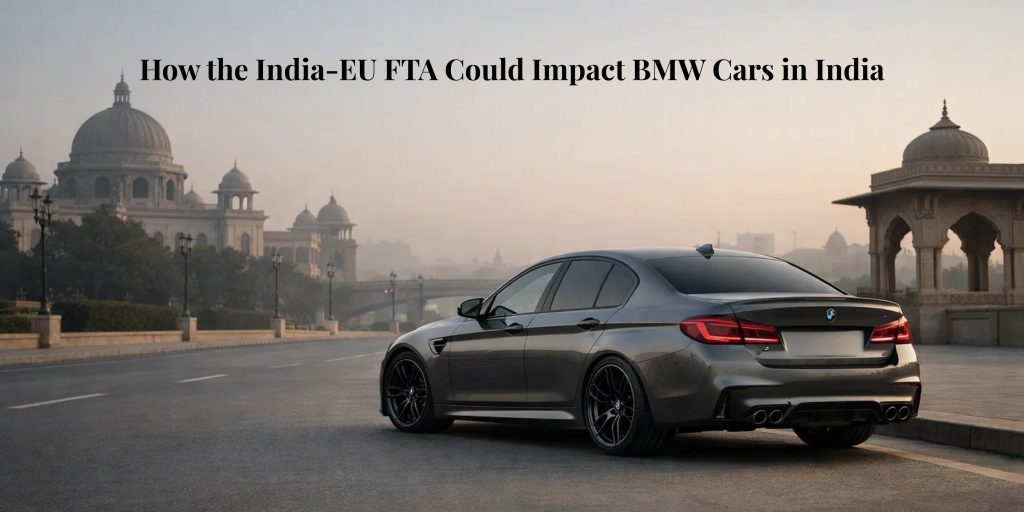
Within the BMW portfolio, the high-performance M Series, including the M4, M5, M8, and Z4, attracts significant interest. These models occupy an aspirational niche and have historically relied on full imports rather than local assembly. For buyers and industry strategists, the central question is whether this trade pact will materially lower prices and improve the availability of BMW’s most powerful machines.
India-EU FTA: Impact on European Automobiles

- Tariff Reforms Under the New Deal Under the agreement reached at the 16th India-EU Summit, India has introduced a calibrated, quota-based liberalization for the automotive sector.
- Import duties on EU-made cars are scheduled to be phased down from current peak levels of 110 percent to as low as 10 percent over several years.
- For 2026, an initial duty reduction to approximately 40 percent is expected for a limited quota of vehicles, specifically those with a landed cost (CIF) exceeding 15,000 euros.
- The preferential duty treatment is subject to an annual quota, reportedly set at 250,000 units, ensuring the liberalization remains controlled rather than immediate and universal.
- The Distinction Between CKD and CBU Imports The technical impact of the FTA depends heavily on how a vehicle enters the country.
- CBU (Completely Built Units): These are fully assembled cars imported from Europe. They currently face the highest tariffs (up to 110 percent). The FTA primarily targets these units, offering the most significant potential for price corrections.
- CKD (Completely Knocked Down): These are vehicles assembled locally at BMW’s Chennai plant. Since CKD kits already enjoy a lower duty structure, the FTA’s impact on their retail price is marginal compared to full imports.
BMW M Series: FTA Exposure and Market Reality

Models Poised to Benefit from Tariff Concessions The M-branded models most likely to see price adjustments are those manufactured in the EU and imported as CBUs. Based on 2026 manufacturing data, these include:
- BMW M4 and M4 CS
- BMW M5
- BMW M8 Coupe
- BMW Z4
For these models, a drop in basic customs duty from 110 percent to 40 percent in the first phase could theoretically reduce the total tax burden significantly, as the base value for calculating GST and compensation cess also decreases.
Models Unaffected or Less Impacted Not all high-performance BMWs will see the same benefits. Key exceptions include:
- BMW M2 and XM: These models are primarily produced in non-EU plants, such as San Luis Potosí in Mexico and Spartanburg in the USA, meaning they do not qualify for EU-specific trade concessions.
- Locally Assembled Performance Variants: Models like the M340i are assembled in Chennai. Because they already operate under a lower tax bracket, the FTA provides little room for further price reduction.
- Electric M Models: The agreement excludes electric vehicles (EVs) like the i4, i5 M60, and i7 from duty concessions for the first five years to protect domestic EV investments.
Industry Analysis and Strategic Outlook
BMW India’s Strategic Position BMW India has noted that while lower duties on imports help expand the brand’s portfolio and introduce niche global models, approximately 95 percent of their sales volume comes from locally manufactured vehicles. Therefore, the FTA is a strategic tool for growth in the enthusiast segment rather than a catalyst for a mass-market price drop.
Pricing Realities and Market Dynamics Automotive analysts caution that several factors may blunt the impact of duty cuts:
- Currency Volatility: The depreciation of the rupee against the euro can often offset gains made from lower import duties.
- Quota Limitations: Once the annual quota for low-duty imports is exhausted, subsequent units will revert to higher standard rates.
- Dealer and Brand Positioning: Manufacturers may choose to reinvest duty savings into better features, extended warranties, or improved service packages rather than direct price cuts.
What This Means for Performance Car Buyers
For M Series Enthusiasts If you are eyeing a fully imported M Series model, the FTA offers long-term benefits:
- Better Model Allocation: Lower barriers make it easier for BMW to bring limited-run editions and a wider variety of specialized performance variants to India.
- Price Competitiveness: EU-built M cars may gain a pricing advantage over rivals imported from the US or Japan.
- Enhanced Availability: Reduced financial risk for the manufacturer may lead to shorter waiting periods for high-end imports.
For Standard BMW Buyers For those interested in the 2 Series, 3 Series, or X-range SUVs, the FTA is less relevant. Local assembly remains the primary driver of pricing for these high-volume models, and their costs will continue to be governed by domestic manufacturing policies.
Also Read : How the India-EU FTA Could Transform the Luxury Car Market in India
Conclusion
The India-EU FTA is a landmark structural shift that paves the way for a more vibrant luxury car market. For the BMW M Series, it signals a transition toward better availability and more competitive pricing for flagship models like the M5 and M8. However, enthusiasts should view this as a gradual evolution. While the deal removes significant hurdles, the final on-road price remains influenced by local assembly strategies, currency shifts, and the specific production origin of each model.
As the Indian automotive landscape evolves, staying informed on these policy shifts is essential for any performance enthusiast. Follow Motozite for the latest updates on luxury car trends, expert analysis of trade policies, and deep dives into the performance machines shaping the future of Indian roads.