
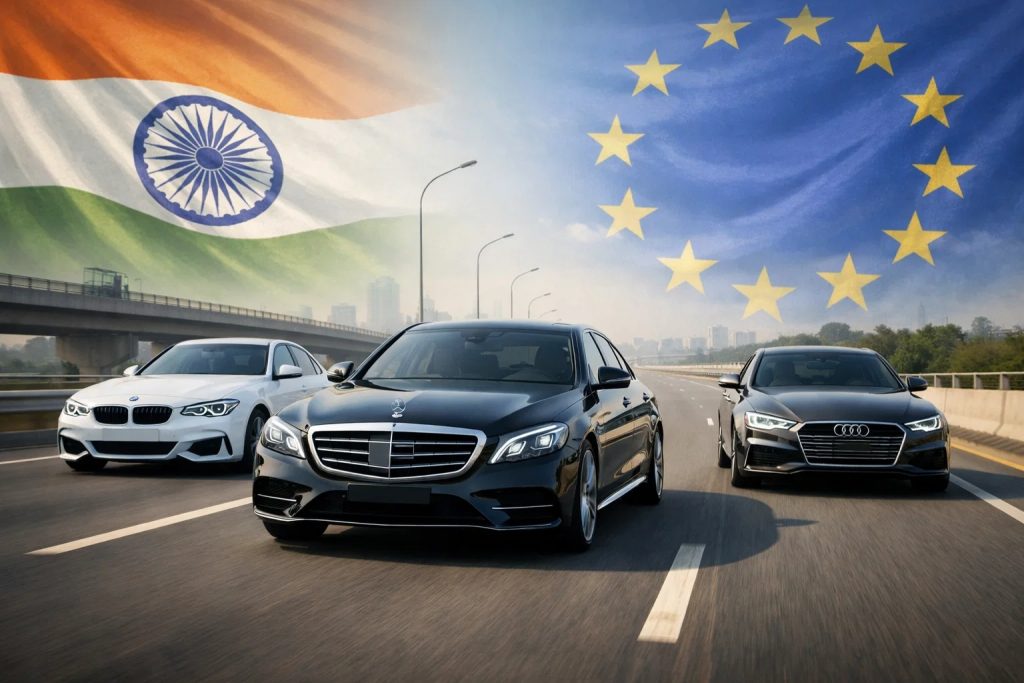
The recently finalized Free Trade Agreement (FTA) between India and the European Union concluded on January 27, 2026, marking a historic turning point in global trade. Dubbed the Mother of All Deals, this pact is set to reshape bilateral commerce by addressing long-standing trade barriers. While the agreement impacts sectors like textiles and engineering, the transformation of the luxury automotive market stands out as a primary focus. With tariff barriers undergoing a significant shift, this deal will redefine how European luxury brands operate and how Indian consumers access premium vehicles.
What the FTA Changes for Luxury Car Imports

-
Substantial Import Tariff Reductions
Under the new agreement, India has committed to a phased reduction of import duties on European vehicles. Currently, effective rates can reach as high as 110% for fully imported units. The FTA introduces a calibrated system where these duties could drop to 40% in the immediate term and eventually reach as low as 10% over the coming years.
-
Strategic Quota System
The tariff concessions are managed through a quota system to balance market liberalization with domestic interests.
- The agreement reportedly covers an annual quota of up to 250,000 vehicles.
- For internal combustion engine (ICE) vehicles, the quota includes 160,000 units with duties falling to 10% over a five-year period.
- This structured approach ensures that the influx of imports remains manageable for the local industry while providing a clear roadmap for price reductions.
-
Focus on Premium European Brands
German and European manufacturers like Mercedes-Benz, BMW, Audi, Porsche, and the Volkswagen Group are the primary beneficiaries. Since these brands face the highest entry barriers, the reduction in duties will likely lead to:
- More competitive pricing for flagship and high-performance models.
- The introduction of niche models and limited editions previously considered unviable.
- Faster alignment with global launch timelines for new automotive technologies.
Also Read: The India-EU FTA 2026 Explained: A Landmark Deal for the Luxury Automotive Sector
Industry Insights: What Automakers Are Saying
No Immediate Price Drops for Local Models
Despite the landmark nature of the deal, industry leaders have managed expectations regarding immediate price cuts. Executives from Mercedes-Benz and BMW have noted that most luxury vehicles sold in India are already assembled locally (CKD units), which already benefit from lower tax brackets compared to fully imported (CBU) models.
Currency and Cost Pressures
Several factors may influence the final showroom prices as the FTA is implemented:
- Currency Fluctuations: A volatile exchange rate between the Indian Rupee and the Euro can offset the savings gained from lower import duties.
- Inflationary Trends: Rising costs in global supply chains and raw materials may absorb some of the tariff benefits.
- Strategic Reinvestment: Automakers might choose to reinvest savings into better service networks or enhanced vehicle features rather than direct price reductions.
Long-Term Strategic Benefits
The true value of the FTA lies in the structural improvements to the automotive ecosystem:
- Improved Allocation: Better access to global stock for high-demand luxury models.
- Technology Transfer: Deeper integration between European R&D and Indian operations.
- Predictability: A stable tariff framework allows brands to plan long-term investments and product portfolios with greater certainty.
What Consumers Can Expect

-
More Choices in the Higher Segments
The deal specifically targets vehicles with a landed value (CIF) of over 15,000 Euros, approximately 14 lakh Rupees. This ensures that the luxury and performance segments see the most growth. Buyers can expect a wider variety of premium SUVs, performance sedans, and grand tourers that were previously restricted by prohibitive taxes.
-
Phased Affordability
While the sticker price on your favorite luxury sedan might not drop tomorrow, the downward pressure on prices will become more evident as the phased reductions reach the 10% target. This will likely expand the luxury car market from its current niche of roughly 1% of total passenger vehicle sales.
-
The Roadmap for Electric Vehicles
To protect the burgeoning domestic EV industry, electric vehicles from the EU will see tariff benefits kick in from the fifth year of the agreement. This staggered approach allows local manufacturers to scale up before facing full competition from imported European electric luxury cars.
Also Read: India-EU FTA Impact on Mercedes Cars for Indian Buyers: Models Affected, Pricing, and Key Insights
A Balanced Transformation

The India-EU FTA represents a significant step toward liberalizing India’s automotive market. By reducing historic barriers, the agreement sets the stage for a more dynamic luxury car ecosystem. While the impact on consumer pricing will be gradual and influenced by broader economic factors, the long-term potential for increased choice, technological innovation, and market competition is undeniable.
As the automotive landscape shifts under this historic trade deal, staying informed on how these changes affect your next purchase is essential. Follow Motozite for the latest expert analysis, luxury car trends, and updates on how global policies are shaping the future of driving in India.