
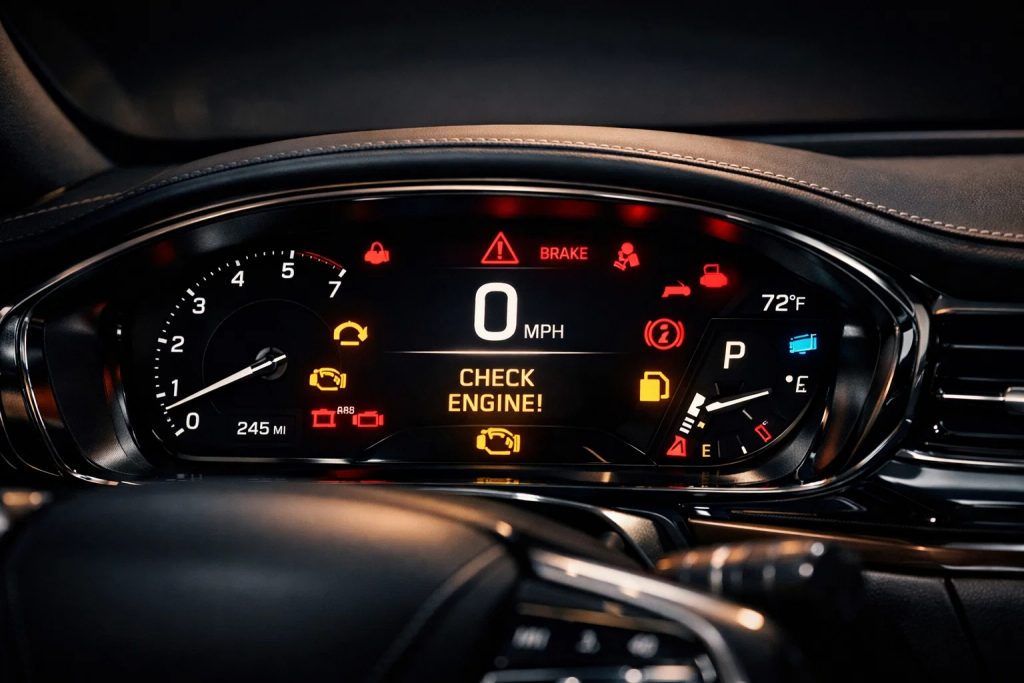
Modern luxury cars are essentially rolling computers. From adaptive air suspension to autonomous driving aids, today’s premium vehicles utilize dozens of sensors and control units. The primary way these systems communicate potential issues is through dashboard warning lights.
Understanding the dashboard warning light car meaning is not just about avoiding inconvenience. In luxury vehicles, it can mean the difference between a minor sensor adjustment and a multi-lakh repair bill. This guide explains every major dashboard symbol, including the emergency light indicator in car meaning, in clear language so you know exactly how to respond.
How to Read Luxury Car Dashboard Warning Lights
Luxury dashboards typically use three layers of communication to prioritize information:
- Color Coding: The Universal Severity Scale
- Red: Immediate danger. This indicates a critical system failure. Stop driving as soon as it is safe and turn off the engine.
- Amber or Yellow: System fault or maintenance required. The car is still drivable, but you should check the system or visit a service center soon to prevent further damage.
- Green or Blue: Informational. These symbols confirm that a system, such as cruise control or high beams, is active and functioning correctly.
- Icons and Digital Messages While standard cars rely solely on icons, luxury vehicles often provide a secondary text message on the digital instrument cluster. For example, a red icon might be accompanied by a message like “Stop Vehicle: Oil Pressure Low” or “Air Suspension Malfunction: Max Speed 60 km/h.”
Red Warning Lights: Immediate Attention Required
These symbols represent the most critical alerts, often referred to as the emergency light indicator in car meaning.
-
Engine Temperature Warning
- Symbol: A thermometer floating in waves.
- Meaning: The engine is overheating.
- Risk: Continued driving can lead to a warped cylinder head or a total engine seizure.
- Action: Pull over immediately and allow the engine to cool. Do not open the coolant reservoir while hot.
-
Brake System Warning
- Symbol: An exclamation mark inside a circle, or the word BRAKE.
- Meaning: Low brake fluid or a serious hydraulic failure.
- Risk: Significant loss of stopping power.
- Action: Stop the vehicle safely. If the pedal feels spongy, do not attempt to drive further.
-
Oil Pressure Warning
- Symbol: An old-fashioned oil can with a drop.
- Meaning: Loss of oil pressure or insufficient oil circulation.
- Risk: Immediate and permanent engine damage.
- Action: Shut off the engine instantly. Check oil levels, but do not restart if the light persists.
-
Battery and Charging Failure
- Symbol: A rectangular battery with plus and minus signs.
- Meaning: The alternator is not charging the battery, or there is a fault in the high-voltage electrical system.
- Risk: The car may lose all electrical power, including power steering and lights, while moving.
-
Airbag and SRS Warning
- Symbol: A seated passenger with a deployed circle.
- Meaning: A fault in the Supplemental Restraint System (SRS).
- Risk: Airbags may not deploy during an accident, or they may deploy unexpectedly.
Amber and Yellow Warning Lights: Check Soon
-
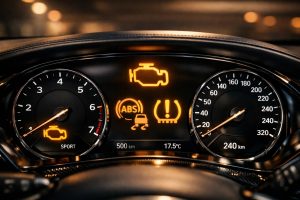
Check Engine Light (MIL)
- Meaning: The Engine Control Unit (ECU) has detected an issue with emissions, sensors, or fuel systems.
- Drive Status: If steady, you can drive to a service center. If flashing, it indicates an engine misfire that can damage the catalytic converter; slow down and seek immediate help.
-
ABS and Traction Control
- Meaning: The Anti-lock Braking System or Electronic Stability Control is disabled.
- Drive Status: You have standard braking, but the car will not assist you during a skid or hard emergency stop.
-
Tyre Pressure Monitoring System (TPMS)
- Meaning: At least one tyre is significantly under-inflated.
- Drive Status: Drive cautiously to the nearest air station. Luxury cars will often show you the exact PSI for each tyre on the display.
Luxury and EV Specific Warning Lights
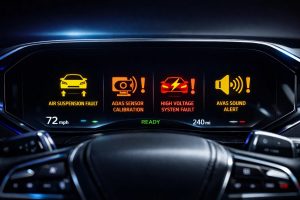
Premium vehicles and Electric Vehicles (EVs) feature specialized indicators that standard cars do not.
-
Air Suspension Fault
- Symbol: A car icon with up and down arrows.
- Context: Common in Mercedes-Benz (Airmatic), BMW, and Audi. It indicates a leak in the air bellows or a compressor failure. The car may sit unevenly or feel extremely bouncy.
-
ADAS and Sensor Calibration
- Symbol: Often a camera or radar icon with an exclamation mark.
- Context: Advanced Driver Assistance Systems (ADAS) like Lane Keep Assist or Adaptive Cruise Control are offline. This is often caused by a dirty sensor or windshield obstruction.
-
EV High-Voltage System Alert
- Symbol: A red car with an exclamation mark through it.
- Meaning: A critical fault in the EV battery or powertrain.
- Action: Stop the vehicle. Most luxury EVs will enter a Limp Mode to protect the battery cells.
-
Acoustic Vehicle Alerting System (AVAS)
- Context: Starting in 2026, many regions including India have mandated AVAS for EVs. If you see a symbol related to external sound, it means the pedestrian alert system is malfunctioning.
What To Do When a Warning Light Appears
- Note the Color: Determine if it is a red emergency or a yellow advisory.
- Read the Cluster Message: Modern luxury cars like the Mercedes MBUX or BMW iDrive will provide a detailed explanation of the fault on the center screen.
- Check Telematics: Use your car’s “SOS” or “Concierge” button. Most luxury brands can remotely run a diagnostic scan of your vehicle while you are still on the road.
- Avoid DIY Resets: Do not use cheap OBD scanners to “clear” the code without fixing the root cause. This can void your warranty and hide serious mechanical issues.
Expert Service Advisor Insight
Luxury cars are designed with high safety margins. Warning lights often appear at the first sign of a component performing outside of its specific parameters. Acting on an amber light early is the most effective way to protect your vehicle’s resale value and avoid the massive labor costs associated with major engine or suspension overhauls.
Understanding these signals ensures that you remain in control of your driving experience. By recognizing the dashboard warning light car meaning and the emergency light indicator in car meaning, you can protect your safety and your automotive investment. For more expert analysis on luxury car maintenance, performance trends, and the latest automotive technology, follow Motozite to stay ahead of the curve and keep your vehicle in peak condition.