
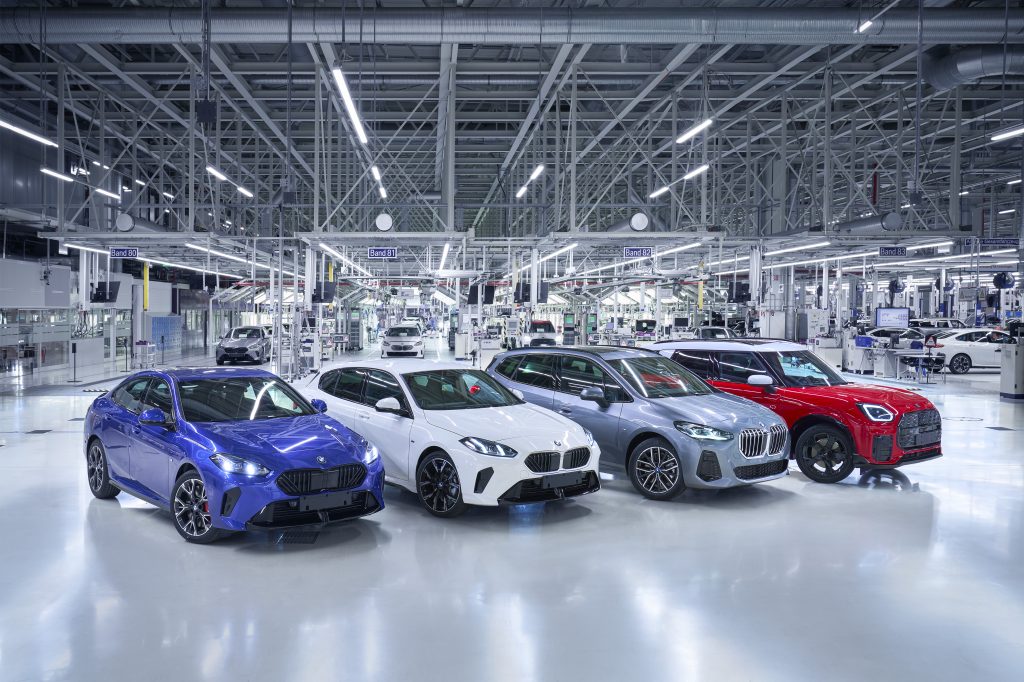
In a compelling demonstration of industrial strength and strategic agility, the BMW Group has once again surpassed the milestone of producing more than one million vehicles at its German manufacturing facilities in 2025. This achievement underscores the company’s production prowess and highlights Germany’s continued significance as a primary global automotive hub during a period of massive industry transformation.
A Historic Milestone for German Manufacturing
In 2025, the BMW Group’s production output in Germany exceeded one million units, placing it among a select group of automakers capable of maintaining such high local manufacturing volumes. Data from the German Association of the Automotive Industry (VDA) indicates that approximately 4.15 million vehicles were produced in Germany overall during this period.
This means that one in four German-built cars originated from a BMW Group plant. This accomplishment reflects robust operational efficiency and is particularly significant given the ongoing global shifts in automotive demand and the rapid pace of electrification.
The Backbone of Production: BMW’s German Plant Network
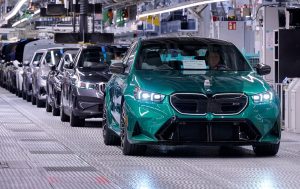
The success of the BMW Group in Germany is built upon a strategic network of four major production facilities. Each site plays a specialized role in the brand’s global ecosystem:
- Dingolfing: As the largest European site, it produces a diverse range of luxury sedans and high-end performance models, including the 4, 5, 7, and 8 Series, alongside the electric i5, i7, and iX.
- Leipzig: This facility focuses on compact versatility, producing the 1 Series, 2 Series, and the MINI Countryman. It is a pioneer in resource-efficient manufacturing.
- Munich: The parent plant manufactures core models such as the 3 Series and the all-electric i4. It is currently undergoing a 650 million Euro transformation to become the first site in the global network to produce only all-electric vehicles from late 2027.
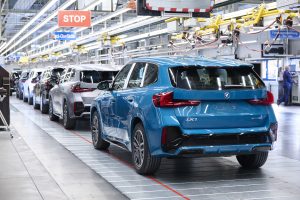
- Regensburg: This plant specializes in premium compact SUVs like the X1 and X2, as well as their electric counterparts, the iX1 and iX2.
Across these locations, BMW utilizes flexible production lines that allow internal combustion engines (ICE), plug-in hybrids (PHEV), and battery-electric vehicles (BEV) to be manufactured on a single assembly line. This adaptability is a cornerstone of the BMW iFACTORY strategy.
Strategic Implications for the Global Auto Industry
The 2025 production figures signal three critical trends for the broader automotive market:
- Resilience Through the iFACTORY Initiative
The ability to maintain million-unit volumes despite supply chain fluctuations highlights the effectiveness of the BMW iFACTORY model. By emphasizing lean, green, and digital processes, BMW has set a benchmark for manufacturing resilience that other luxury OEMs are now looking to emulate. - Localized Production with Global Reach
While many manufacturers are shifting production to lower-cost regions, BMW’s commitment to Germany reinforces a local-for-local value chain strategy. Vehicles built in Germany primarily serve the European market while sustaining significant export volumes to the United States and China. - The Power of Drivetrain Flexibility
BMW’s “Power of Choice” strategy allows the brand to scale EV production up or down based on real-time consumer demand without halting entire factories. In 2025, this flexibility was vital as the market for Battery Electric Vehicles (BEVs) saw a significant 43 percent increase in German registrations.
Electrification and Future Production Trends
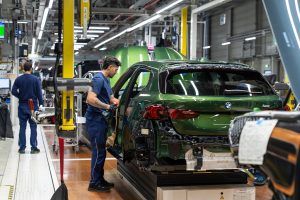
While the 2025 milestone focuses on volume, it occurs during BMW’s aggressive shift toward the Neue Klasse-a new generation of electric vehicles. The German plants are currently being prepared for this transition, with the Munich facility scheduled to roll out the first Neue Klasse sedan in 2026.
In 2025, electrified vehicles accounted for a growing share of BMW’s total output, aligning with the VDA’s report that Germany has consolidated its position as the world’s second-largest production location for electric cars.
Production Portfolio Snapshot (2025)
|
Plant |
Key Model Series | Available Drivetrains |
|
Dingolfing |
4, 5, 7, 8 Series, i5, i7, iX, M4, M5 | BEV, PHEV, ICE |
|
Leipzig |
1 Series, 2 Series, MINI Countryman |
BEV, PHEV, ICE |
| Munich | 3 Series, 4 Series Gran Coupe, i4, M3 |
BEV, PHEV, ICE |
| Regensburg | X1, X2, iX1, iX2 |
BEV, PHEV, ICE |
The Road Ahead for BMW Manufacturing
The official, granular production data will be released in the Integrated BMW Group Report in March 2026. Industry analysts will specifically look for the exact percentage of all-electric models within the million-unit total. As global markets move toward stricter emissions standards, BMW’s ability to balance high-volume production with cutting-edge sustainable technology will define its leadership in the premium segment.
BMW’s 2025 achievement is a powerful indicator of how traditional manufacturing excellence can be successfully merged with digital innovation. By maintaining a strong industrial heart in Germany, the BMW Group ensures it has the scale and technical foundation to lead the next era of mobility.
Follow Motozite for the latest automotive industry insights, including production trends, new luxury car launches, EV innovations, and the expert analyses driving the future of mobility.
